

Hair & Makeup Masterclass — Lecture 3: Pro Sanitation & Kit Setup (Clean, Calm, Client-Trust Workflow)
There’s a reason top artists feel “high-end” before they even begin: the station is clean, the kit is organized, and the energy is calm. Clients may not know every product or technique you use, but they always notice when an artist is hygienic, prepared, and professional. This lecture gives you a complete sanitation and kit setup system that protects clients, protects your reputation, and makes every service feel more elevated.
Sanitation is not just about rules. It’s about respect. It tells the client, “You’re safe with me. You’re cared for here.” That message matters whether the client is getting ready for a wedding, a photoshoot, an important event, a performance, or simply taking time to feel refreshed and confident again.
If you’re building your clientele as a freelance makeup artist or training toward the standards expected in a makeup school Miami environment, this lecture is your foundation. Clean tools + clean workflow = clean results on the skin and a stronger brand long-term.
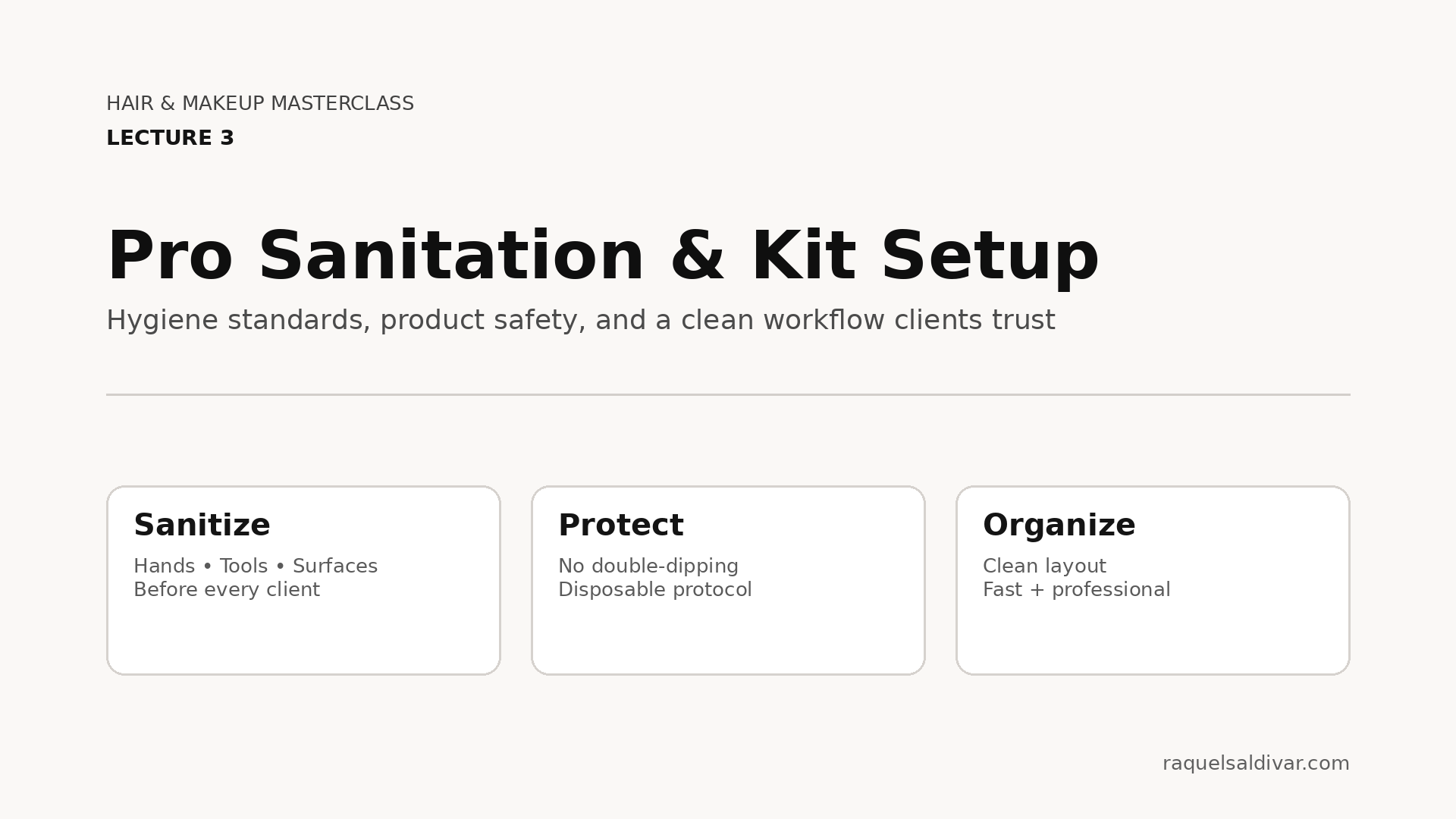
Masterclass Series: This is Lecture 3 of a 30-lecture Hair & Makeup Masterclass.
Mentorship Registration: Click here to register
What You’ll Learn in Lecture 3
- A complete sanitation routine: before, during, and after every client.
- The “no double-dipping” system that keeps your kit safe without slowing you down.
- How to clean, disinfect, and store tools so your kit stays consistently sanitary.
- A five-zone station layout that makes your service feel calm, premium, and professional.
- How to communicate hygiene confidently (without making clients nervous).
- Why cleanliness improves the client experience and increases rebooking.
Core principle: Your technique creates beauty. Your hygiene creates trust. Trust is what builds a lasting clientele.
Table of Contents
- Why Sanitation Is Part of a Luxury Experience
- The Hygiene Mindset: Calm, Clean, Consistent
- The 6 Pillars of a Pro Sanitation System
- Non-Negotiables (No Exceptions)
- Client Sanitation Checklist (Step-by-Step)
- Station Setup: The 5-Zone Layout
- Product Safety: Powders, Creams, Liquids
- Eyes + Lips: Highest-Sensitivity Area
- Brush Hygiene: Deep Clean vs Quick Clean
- Storage & Packing: Keeping the Kit Clean Between Clients
- How to Talk About Hygiene Warmly & Confidently
- Beauty Psychology: Confidence, Presence, and Self-Respect
- Common Sanitation Mistakes (and Fixes)
- Practice Drills
- Register for Mentorship
Why Sanitation Is Part of a Luxury Experience
Sanitation isn’t only about safety—it’s part of the experience. A clean station signals professionalism immediately. It also helps clients relax. When clients relax, their face softens, their skin looks better, and the service becomes more enjoyable. That “I’m in good hands” feeling is a huge part of what makes artistry feel premium.
And practically? A clean workflow makes you faster. You spend less time searching, fixing, and second-guessing. You become more consistent—and consistency is one of the biggest keys to building a strong reputation in this industry.
The Hygiene Mindset: Calm, Clean, Consistent
The goal isn’t to feel anxious about germs—it’s to build a system so hygiene becomes automatic. When your kit is structured, you don’t have to “remember” to be clean. The system does it for you.
Think of sanitation like posture: you don’t want to micromanage it all day, you want habits that keep you aligned naturally. Same with kit hygiene—habits that make it effortless.
The 6 Pillars of a Pro Sanitation System
- Hands: clean hands are your first tool.
- Surfaces: your station must be disinfected and protected.
- Tools: clean vs used must be separated at all times.
- Products: powders, creams, liquids have different protocols.
- Disposables: your safety net and speed advantage.
- Storage: packing and organization keep the kit clean between clients.
Non-Negotiables (No Exceptions)
- No double-dipping: anything that touches a client does not go back into the product.
- Eyes + lips: use single-use applicators whenever possible; sanitize strictly.
- Creams: remove with spatula, place on a palette, and work from the palette.
- Separate zones: clean tools and used tools do not touch.
- When unsure: choose disposable or freshly sanitized.
Client Sanitation Checklist (Step-by-Step)
A checklist isn’t “basic”—it’s professional. It helps you stay consistent when you’re busy, traveling, or on a tight schedule. Consistency keeps clients safe and keeps your service quality high.
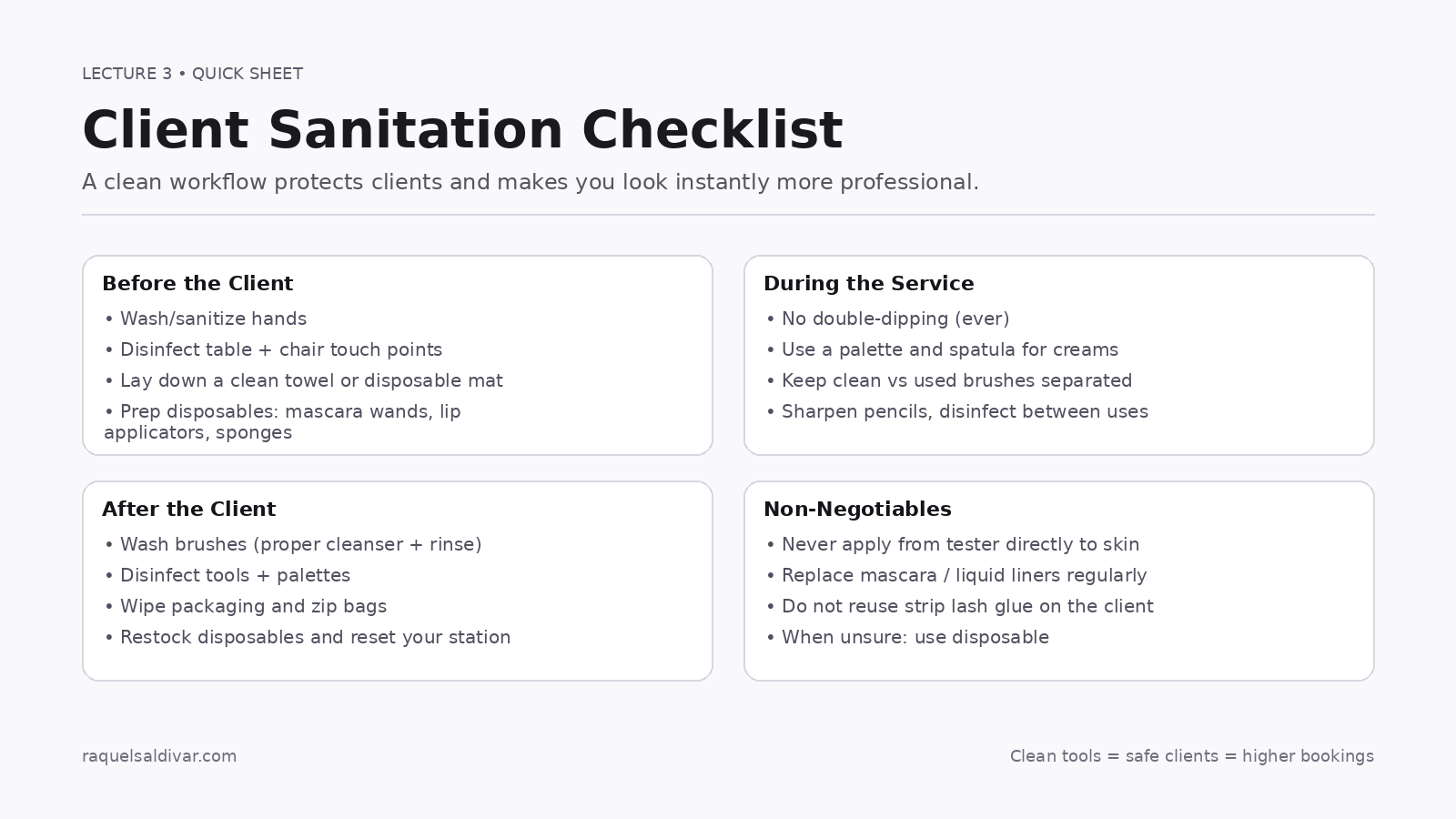
Before the Client (2–5 Minutes)
- Sanitize hands.
- Disinfect working surfaces and touch points.
- Lay down a clean towel or disposable mat.
- Prep disposables (wands, lip applicators, cotton swabs, sponges).
- Set up a clean brush holder and a separate “used tools” container.
- Prepare palette + spatula for creams.
During the Service (Continuous)
- No double-dipping—ever.
- Work from the palette for creams and liquids when appropriate.
- Keep clean tools and used tools physically separated.
- Use disposables for eyes and lips when possible.
- Re-sanitize hands as needed (especially after touching phones, bags, handles).
After the Client (5–15 Minutes)
- Bag used brushes for deep cleaning.
- Disinfect tools, palettes, and touch points.
- Wipe packaging you handled during service.
- Dispose of single-use items.
- Reset the station so the next service starts calm and clean.
Station Setup: The 5-Zone Layout
The easiest way to prevent contamination is to design your station so hygiene happens automatically. That means clear zones—each one with a purpose—so you never have to guess whether something is clean.
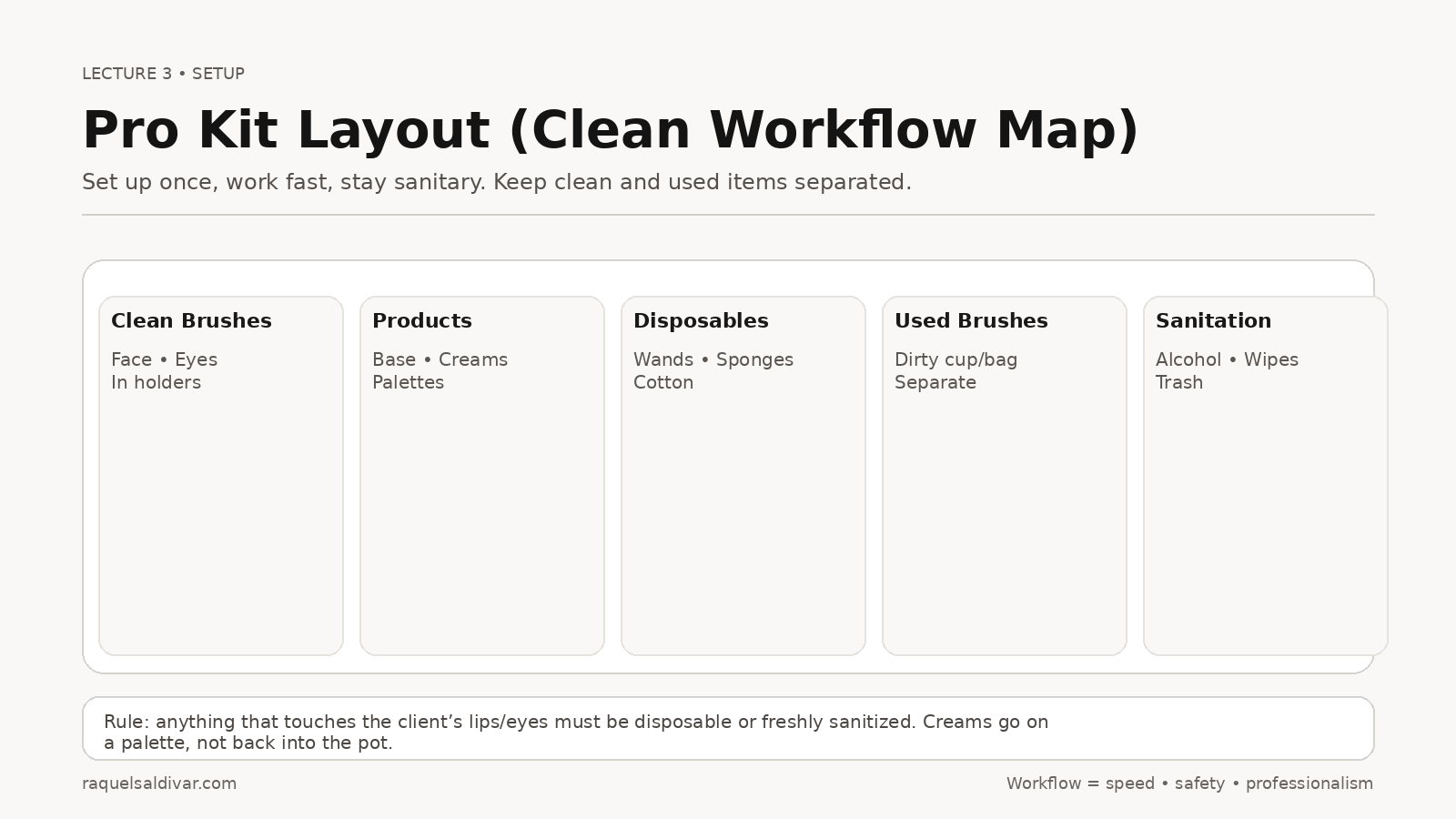
The 5 Zones
- Clean Tools: clean brushes, sanitized tools, clean sponges.
- Products: base products and palettes in the order you use them.
- Disposables: wands, applicators, cotton, tissues.
- Used Tools: a clearly separate dirty cup/bag.
- Sanitation: wipes, alcohol, hand sanitizer, trash.
Product Safety: Powders, Creams, Liquids
Product safety is about preventing cross-contamination and keeping your kit fresh long-term. Different product types require different habits:
Powders
Powders can still be contaminated through brushes and puffs. Use clean tools, keep powders closed, and avoid skin-to-pan contact whenever possible.
Creams
Cream products need the strictest protocol. Use a spatula, place product on a palette, and apply from the palette only. This also improves your workflow because you can custom-mix shades cleanly.
Liquids
Dispense liquids onto a palette when possible. Avoid letting the bottle opening touch skin or used tools.
Register Now for Personalized Training with Raquel
Want your kit setup and sanitation workflow reviewed so you feel more confident and professional instantly? Register now to schedule your next personalized training session with Raquel. Click below to register, and one of our representatives will contact you to confirm the details.
Click Here to RegisterAfter you register, our team will reach out to schedule your session and answer any questions.
Eyes + Lips: Highest-Sensitivity Area
Eyes and lips deserve extra care. This is where clients are most sensitive, and where sanitation habits matter most. Use disposable applicators when possible, sanitize strictly, and never take shortcuts.
Brush Hygiene: Deep Clean vs Quick Clean
Brush sprays can be helpful between steps, but deep cleaning is what truly keeps brushes safe and performing well. Build a brush rotation plan so you always have clean tools ready.
Storage & Packing: Keeping the Kit Clean Between Clients
How you pack is part of hygiene. Clean brushes should be protected from dust and crushed bristles. Used tools should be sealed in a separate container. Disposables should stay in their own pouch so you never run out mid-service.
How to Talk About Hygiene Warmly & Confidently
Keep it simple and reassuring. Hygiene should feel like a normal part of a professional service:
- “I’m going to sanitize my hands quickly before we start.”
- “For eyes and lips, I use disposables—just keeping everything extra clean.”
- “I’ll pull creams onto my palette so the product stays fresh and sanitary.”
Beauty Psychology: Confidence, Presence, and Self-Respect
Beauty has an incredible emotional impact when it’s approached in a healthy way. When someone looks in the mirror and sees themselves feeling refreshed, radiant, and cared for, something shifts—posture improves, expression softens, and confidence rises.
The most empowering form of beauty is not about changing someone into a different person. It’s about helping them feel more like themselves—more polished, more awake, more confident, more aligned. That’s why makeup and hair can feel transformative: they’re not only visual, they’re emotional.
And here’s what matters ethically: your job isn’t to create insecurity. Your job is to create support. Clients should leave feeling inspired, not pressured—uplifted, not judged. When you lead with care, beauty becomes a tool for confidence, presence, and self-respect.
That’s also why sanitation is part of transformation. A clean, calm service helps clients feel safe and taken care of. Safety creates relaxation. Relaxation creates trust. Trust creates a better experience—and a better result.
Common Sanitation Mistakes (and Fixes)
Mistake: Touching phones/bags and then continuing
Fix: sanitize hands and reset quickly. Keep your setup simple so it’s easy to stay clean.
Mistake: Returning used tools into clean areas
Fix: separate containers and make the used-tool zone obvious.
Practice Drills
- 3-minute setup: time your station setup until it’s effortless.
- Palette protocol drill: complete a full face using creams from a palette only.
- Reset drill: fully reset your station after one look—no shortcuts.
Register for Mentorship
Want Raquel to review your kit setup and sanitation workflow so your service feels more professional instantly? Register here and one of our representatives will contact you:
Build a clean, calm, trusted system that supports higher bookings and a better client experience.
Educational content only. Always follow local guidelines and best practices.

Comments are closed